
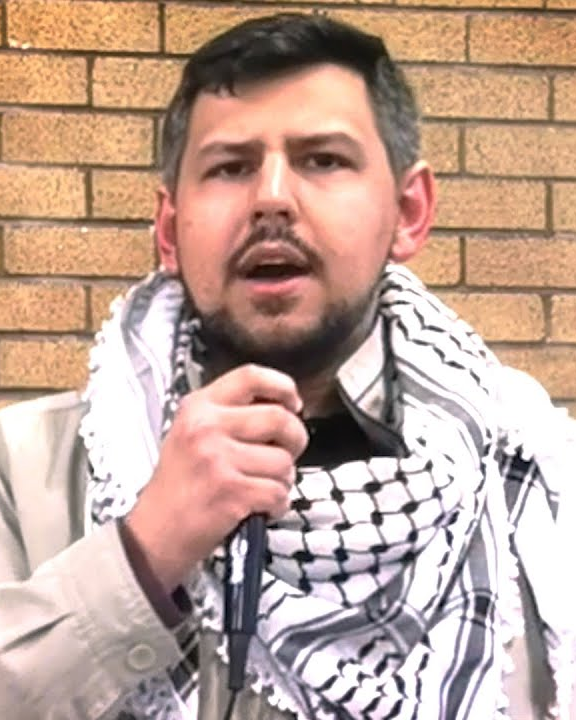
Richard Medhurst’s Energy Map of the Iran War
Richard Medhurst’s map of the Iran war is simple, and that is both its appeal and its problem. He says there was no Iran war. There was an energy war, fought with blockades, and the Western Hemisphere was the prize the cameras missed.
Medhurst, a British journalist who works the UN circuit, has spent the months since the strikes arguing that Washington’s campaign should not be filed under Tehran at all. In his posts, his Substack investigation, and the film he calls the birth of the petrogas-dollar, the war is one front in a grab for oil, gas, and the routes that move them. Venezuela, Gaza, Syria, Lebanon, Ukraine, and Greenland sit on the same board. The Strait of Hormuz, in this telling, is the distraction. The Gulf of Mexico and the Panama Canal are the point.
The claim is worth taking apart, because it is more coherent than the nightly version of the war, and less proven than he says.
One war, several coasts
The official story still treats the Iran campaign as a contest with a regime: nuclear program, missiles, Israel, a head of state killed, a ceasefire that may or may not hold. Medhurst asks the reader to drop that frame. A singular war in Iran, he writes, lets the United States and NATO off the hook for Venezuela and Russia. Look instead at a year of energy pressure. Russian oil infrastructure hit. A large share of China’s oil and LNG supply disrupted. Venezuelan fields, the largest reserves on earth, brought under American control. Gas off Gaza and what remained of Syria’s energy position folded into the same ledger. Iran blockaded. Then, he says, the dollar had a new prop: not only the old petrodollar, but a petrogas-dollar, backed by whoever holds the taps.
He dates the design earlier than the current administration. The “Donroe Doctrine,” in his account, is not a Trumpism. It is the 2001 National Energy Policy, written after Dick Cheney’s closed meetings with oil executives: diversify away from hostile suppliers, build production at home and in the Western Hemisphere, and treat Venezuelan reserves as strategic. The White House fought to keep those meetings secret. Medhurst treats the secrecy as the tell. Twenty-five years later, the Caribbean blockade and the Iranian one are the same document with different coastlines.
There is a real pattern here, and a critic does not have to be a Medhurst partisan to see it. Energy has been a declared object of American strategy since the Carter Doctrine. Wars that are briefed as politics often clear the way for contracts. A state that can interrupt a rival’s exports, and then sell the replacement cargo, has done something more durable than a regime-change speech. On that narrow point his ledger is not crazy.
The hemisphere as the vault
The sharper part of the theory is geographic. Medhurst argues that American energy power is anchored in the Gulf of Mexico, not the Persian Gulf. Shale, refineries, the canal, the dollar’s oil invoicing: that is the vault. Hormuz is a choke point Washington can survive if the Atlantic basin is locked. Venezuela is the basin’s unfinished piece. Control it, and the hemisphere’s reserves sit inside a system the United States already polices. Fail to control it, and a hostile supplier sits inside the Monroe perimeter with the largest tank on earth.
His counterfactual follows from that. Iran, he says, should have put conventional missiles and drones in Venezuela, as the Soviets put missiles in Cuba. Panama and the Gulf of Mexico would then have been in range. Hormuz would have been the lesser card. He has repeated the point for months: it is “beyond him” that Tehran never did it, and that Moscow pulled its missiles out of Cuba. Give an inch, he says, and they take a mile. In his view Iran fought on the wrong map. It hit Israel, absorbed the blow at home, and left the vault untouched. Israel and Ukraine, in the same argument, are shields. They take the kinetic hits so the principal never has to fight near his own industrial base.
This is the part American readers should not dismiss as crank geography. Distance still governs war. A conventional battery in the Caribbean would have changed the insurance math on the canal and on Gulf Coast terminals in a way a speech at the UN would not. Whether Iran could have placed it, kept it, and survived the response is a different question. Medhurst treats the omission as a strategic mistake. He does not really price the preemption it would have invited.
Where the theory overfits
The trouble starts when a pattern is promoted to a single cause.
Medhurst writes that there is “no doubt whatsoever” the war was about trade routes, oil, and gas, and that it made the United States stronger. Doubt is still available. Energy explains a great deal of what states do. It does not explain the decision to kill a head of state, the Israeli operational tempo, or the domestic politics that made a strike sellable. A theory that connects Iran, Greenland, Gaza, and Ukraine in one paragraph has to say what would falsify it. His does not. Every subsequent sanction, cargo seizure, or Chevron deal is filed as further proof. That is a narrative that can only grow.
The Cheney lineage has the same defect. The 2001 energy policy did stress hemisphere supply and Venezuelan reserves. It was also a document of its panic, written by an administration that had not yet spent a trillion dollars failing to political-engineer the Middle East. To call the present blockade the fruit of those meetings is to skip every administration that ignored, revised, or contradicted them. Continuity of interest is not continuity of plan. Oil companies wanted Venezuelan barrels in 2001. They also wanted them in 1973. A desire is not a blueprint.
There is a further American objection he does not take seriously. If the aim was a stronger energy position, the war still has a cost side he folds into the victory. Blockades raise prices for allies. They push China and India toward longer contracts with whoever can still deliver. They teach every second-tier state the lesson he wants Iran to learn: do not meet the United States on your own coast. A pirate state, his phrase, can be tactically successful and strategically expensive. He counts the seizures. He does not count the imitation they will produce.
What an American critic should keep
Drop the singular-plot claim and something usable remains.
The Iran campaign cannot be reported as a self-contained morality play about one regime. The same months brought a Venezuelan energy seizure, continued pressure on Russian export infrastructure, and a harder American line on Arctic routes. Those are not footnotes. A press that covers Hormuz every night and the Caribbean once a week is mis-drawing the map, whether or not Medhurst’s “one war” is right.
The hemisphere point is the one Washington should argue with, not ignore. Control of Atlantic-basin supply is a quieter project than a strike on Tehran, and more consistent with two centuries of American practice. Monroe was a political doctrine. The modern version is a logistics doctrine: canals, refineries, invoicing, the right to stop a hull. If that is what the blockades are for, the public argument should be made in those terms. The nuclear file and the hostage file can be true and still not be the whole file.
Medhurst’s remedy is the weak close. He wants Iran and Russia to put weapons in the American near-abroad so the cost falls on Florida and the canal rather than on Isfahan and Belgorod. That is a realist sentence. It is also an invitation to the kind of crisis the Cuban missile episode nearly became, offered as if the lesson of 1962 were that Moscow left too early. An American critic can grant the map and refuse the prescription. States that can strike the Gulf Coast will eventually be struck for having the ability. He calls that realism. It is also how local wars become hemisphere wars.
The useful residue is smaller than his film. There is an energy campaign. It runs through more theaters than Iran. The Western Hemisphere is not a side show in it. None of that requires a single hidden hand, a straight line from Cheney’s calendar, or the conclusion that the United States came out cleaner and stronger. It requires a press willing to follow the cargo. Medhurst follows it. He then arrests it for a crime he has already decided on.
