
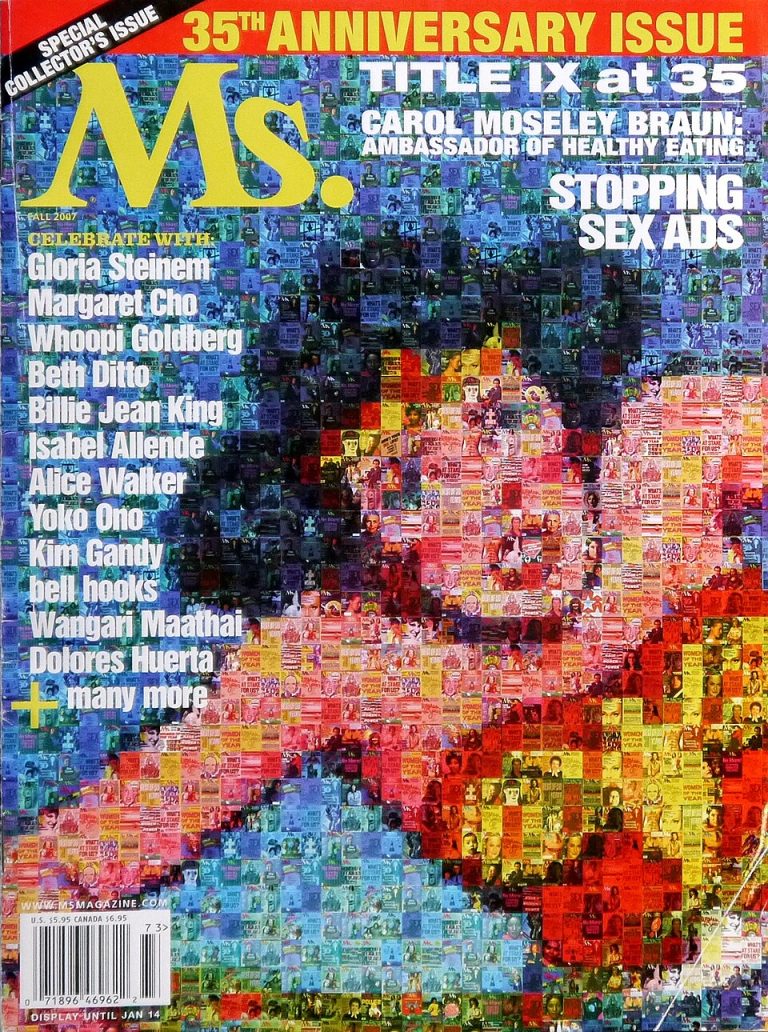
The Gloria Steinem – CIA Connection: How a Housewife Magazine Was Transformed
For decades, millions of American women trusted women’s magazines to provide practical advice on cooking, homemaking, child-rearing, fashion, and maintaining a happy marriage. These publications largely celebrated traditional womanhood and domestic life. Then, in the early 1970s, something changed dramatically. A new magazine called Ms. appeared on the scene, led by a charismatic figure named Gloria Steinem. What followed was not just a shift in tone — it was a full-scale ideological revolution against traditional gender roles, marriage, and motherhood.
Many researchers and independent journalists have pointed to a disturbing possibility: that this transformation was not entirely organic. They argue that Gloria Steinem’s earlier connections to the CIA, combined with the sudden funding and rapid rise of Ms. Magazine, suggest that powerful interests played a role in reshaping American culture through feminism.
Steinem’s Background
Before becoming the face of modern feminism, Gloria Steinem worked with organizations that had clear ties to the Central Intelligence Agency. In the late 1950s and 1960s, she was involved with the Independent Research Service, a group that received funding from CIA-linked foundations. The purpose of these groups was to counter communist influence among students and young intellectuals in Europe and elsewhere. Steinem has admitted to this work, though she has always claimed it was limited and well-intentioned.
Critics argue that her intelligence connections did not simply disappear when she entered the feminist movement. Instead, they suggest that certain elements within the CIA or aligned foundations saw radical feminism as a useful tool for social engineering — breaking down the traditional family unit, increasing individualism, and making society more dependent on the state and consumer economy.
The Transformation of Women’s Media
Prior to Ms. Magazine, American women’s magazines such as Ladies’ Home Journal, Good Housekeeping, and McCall’s were primarily focused on domestic life. They offered recipes, sewing patterns, parenting advice, and stories that reinforced the role of women as wives and mothers. While some of these magazines had begun to modernize in the 1960s, they still largely operated within a framework that respected traditional gender roles.
When Ms. Magazine launched in 1971, the tone changed almost overnight. The magazine aggressively promoted the idea that traditional womanhood was oppressive. Marriage was portrayed as a trap, motherhood as a burden, and housewives as victims of a patriarchal system. In its pages, women were encouraged to reject their biological roles, pursue careers above family, and view men with suspicion. Over time, the magazine also began incorporating spiritual and esoteric elements, including positive references to ancient goddesses — most notably Kali, the Hindu goddess associated with destruction, chaos, and fierce feminine power.
This was not a natural evolution of women’s media. It was a deliberate ideological project.
The Funding Question
One of the most controversial aspects of this story is the question of funding. Ms. Magazine was able to gain national prominence remarkably quickly for a new publication. While mainstream explanations point to private donors and advertising revenue, some researchers claim that significant early support came from foundations with ties to intelligence communities or major establishment interests. The goal, according to this theory, was to accelerate the breakdown of the American family and traditional social structures.
By promoting radical individualism and the rejection of motherhood, the magazine (and the broader feminist movement it helped shape) contributed to declining birth rates, higher divorce rates, and a cultural shift that made it socially acceptable — even celebrated — for women to prioritize career and self-fulfillment over family.
Long-Term Consequences
The effects of this cultural shift are visible today. Western societies face historically low birth rates, widespread family breakdown, and deep confusion around sex and gender. Many women report feeling exhausted and unfulfilled despite decades of supposed liberation. At the same time, men have become increasingly alienated from family life.
Was this outcome accidental? Or was it the intended result of a long-term cultural operation? The involvement of Gloria Steinem — a woman with documented intelligence connections — in the transformation of women’s media raises serious questions that deserve honest examination rather than automatic dismissal as “conspiracy theory.”
The quiet revolution that began in the glossy pages of Ms. Magazine may have been one of the most successful psychological and cultural operations in modern history.
