
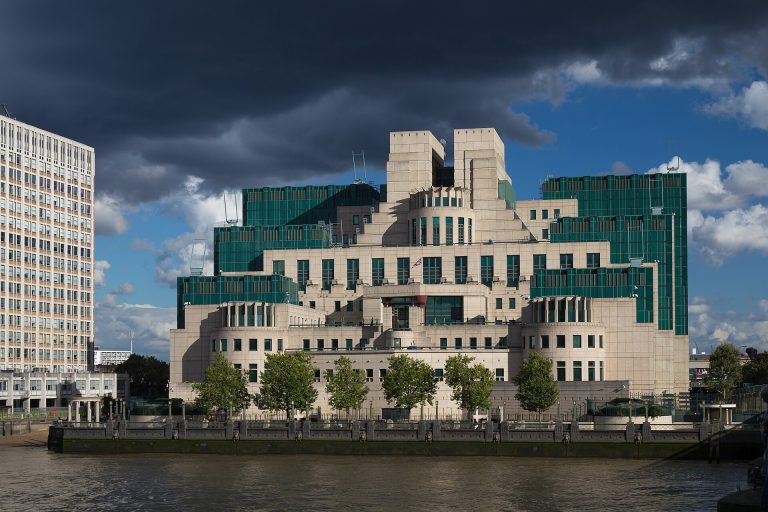
Former MI6 Chief Declares Houthis “Here to Stay” at Doha Forum
On 19 October 2026, Sir John Sawers, who led Britain’s Secret Intelligence Service (MI6) from 2009 to 2014, delivered a blunt assessment of the war in Yemen at the Global Security Forum in Doha. Speaking on a panel about the Five Eyes intelligence alliance, he stated:
“The Houthis are here to stay. They’re not going to be defeated, and they’re going to remain in control of a large part of Yemen for the foreseeable future.”
He added that Ansar Allah (the Houthis’ formal name) has “exposed the limited options that Saudi Arabia has in terms of dealing with” the group, that the Houthis pursue “their own national Yemen agenda,” and that Saudi-backed efforts “to sustain an alternative government have not been successful over the last 10 years.”
The remarks, delivered in public and quickly circulated with video clips, stand out for their source. Sawers is not a commentator or activist. He is a former chief of one of the West’s most influential intelligence agencies, a career officer who served under both Labour and Conservative governments and who has spent decades assessing hard security problems.
Why the statement matters
For more than a decade, the dominant public framing of the Yemen conflict has been that the Houthis are an Iranian proxy that can be rolled back by sustained military pressure, sanctions, and support for the internationally recognized government. Saudi Arabia and its partners have spent years and large resources trying to restore that government and dislodge Houthi control of Sanaa and the northern highlands. Multiple air campaigns by the United States, the United Kingdom, and Israel have targeted Houthi capabilities after the group began attacking Red Sea shipping.
Sawers’ assessment cuts against that framing on three points:
- Defeat is not the expected outcome. He treats Houthi control of a large part of Yemen as a durable fact rather than a temporary setback that better tactics or more pressure will reverse.
- The group has local roots and interests. By stressing that the Houthis have “their own national Yemen agenda,” he distances the movement from the pure-proxy description often used in Western and Gulf commentary. This does not deny Iranian support; it says the movement is not solely an extension of Tehran’s will.
- External options are limited. A decade of trying to sustain an alternative government has not worked. Air power, interdiction, and political support have not produced a decisive shift on the ground.
Context of the war
The Houthis took Sanaa in 2014 and have held the capital and much of the north ever since. They have survived years of Saudi-led military intervention, a naval blockade, and later direct strikes by Western and Israeli forces. In 2026 the conflict has flared again, with Houthi forces making gains along the Red Sea coast and near the Bab al-Mandeb Strait — a vital shipping route. The group controls territory that includes a large share of Yemen’s population and has developed missile and drone capabilities that allow it to project force beyond its borders.
Sawers’ comment arrives while Saudi Arabia has renewed offensive operations and while shipping through the Red Sea remains disrupted. His view is that these pressures have not, and are unlikely to, remove the Houthis from a major share of Yemeni territory.
A game-changing admission?
Whether the statement is a “game changer” depends on how it is received. It does not invent a new military reality; Houthi staying power has been visible for years. What it does is place an unusually authoritative Western intelligence voice on the record saying that the current trajectory does not lead to Houthi defeat.
For policymakers, this has practical implications:
- Diplomacy over decisive military victory. If the Houthis are expected to retain significant territory for the foreseeable future, strategies that assume their elimination become less realistic. Negotiated arrangements, de-escalation deals, or long-term containment move higher on the list of options.
- Red Sea and regional security. Continued Houthi capacity to threaten shipping and regional targets becomes a standing problem rather than a temporary one. Insurance costs, naval deployments, and alternative routing are likely to persist.
- Saudi and Gulf calculations. Public acknowledgment from a former MI6 chief that Saudi options are limited and that alternative-government efforts have failed adds weight to any internal debates in Riyadh about the costs and prospects of continued military pressure.
- Iranian leverage. Even if the Houthis are not a pure proxy, their endurance strengthens the broader network of Iranian-aligned groups that have survived U.S. and allied pressure in multiple theaters.
Critics of the statement have already responded that the Houthis are a minority force holding parts of Yemen by force, that they serve Iranian interests, and that defeat remains possible with sustained ground pressure and political unity among anti-Houthi factions. Those arguments have been made throughout the war. Sawers’ contribution is to say, from a position of long intelligence experience, that the evidence of the last decade does not support the expectation of near-term defeat.
The Doha remarks do not end the war or rewrite policy by themselves. They do, however, mark a public shift: a former head of MI6 has said out loud what many analysts have argued privately — that the Houthis are not a temporary obstacle, and that any durable approach to Yemen will have to treat their control of a large part of the country as a fact for the foreseeable future.
