
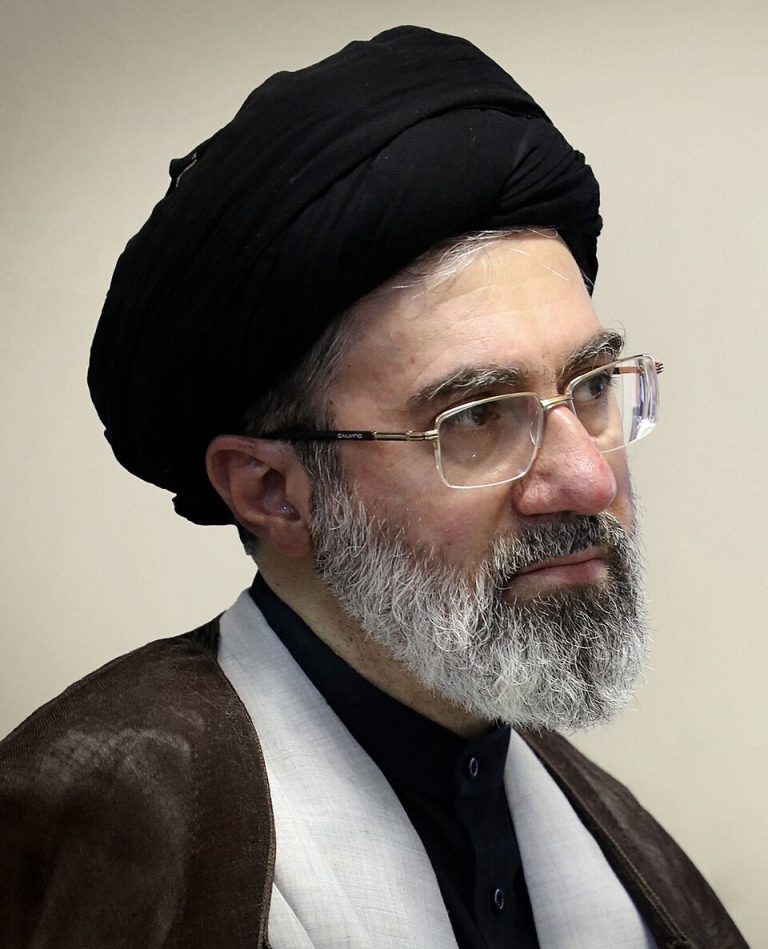
Mojtaba Khamenei – Dead or in Hiding? The Nine-Month Silence Shaking Iran
Since the escalation of the Israel-Iran war in October 2025, one of the most powerful and enigmatic figures in the Islamic Republic has completely disappeared from public view. Mojtaba Khamenei, the second son of Supreme Leader Ali Khamenei, has not been seen or heard from for nearly nine months. There have been no official statements, no verified photographs, no meetings with his father, and no public appearances whatsoever. This prolonged silence has given rise to a growing and increasingly credible theory: that Mojtaba Khamenei may be dead.
The timing of his disappearance is highly suspicious. It coincides precisely with the peak of Israeli targeted assassinations and airstrikes against senior Iranian officials and nuclear scientists. Mojtaba, who controls significant parts of the Revolutionary Guard’s vast economic empire and plays a central role in the clerical patronage networks, would have been a high-priority target. Several major international newspapers, including The Times of Israel, The Jerusalem Post, Bloomberg, and The Wall Street Journal, have highlighted his absence and noted that the lack of any proof of life is becoming difficult to explain.
Iranian opposition media outlets such as Iran International and Radio Farda have gone even further, suggesting that the regime is actively concealing his death. The Iranian government has a well-documented history of hiding the deaths of important figures for strategic reasons, sometimes for weeks or even months. The complete absence of any attempt to prove Mojtaba is alive — such as a short video or a public appearance alongside his father — has only strengthened these suspicions.
If Mojtaba is indeed dead, the implications for the regime would be severe. He has long been regarded as the most likely successor to his aging father. His death would create a dangerous power vacuum and could trigger intense internal struggles among hardliners and different factions within the Revolutionary Guard. This may explain why the regime has chosen silence over confirmation.
However, there is also a strong counter-argument. Mojtaba may still be alive but deliberately kept in deep hiding for security reasons. Some analysts argue that Western and Israeli media outlets are actively pushing the “he is dead” narrative in order to force him out of hiding. By repeatedly claiming he may have been killed, they put pressure on the regime to prove he is alive. If Mojtaba were to appear publicly to disprove the rumors, he would immediately become an easier target for assassination. In this view, the media speculation is not neutral reporting but a calculated psychological operation.
Regardless of which explanation is correct, the Iranian regime finds itself in a difficult position. Confirming his death would be a major humiliation and a blow to regime morale, while proving he is alive could expose him to further attacks. The longer the silence continues, the more damaging the speculation becomes.
At this stage, the absence of Mojtaba Khamenei has become one of the most closely watched mysteries in Iranian politics. Until the regime provides clear and convincing evidence that he is still alive, the theory that he was killed during the war will continue to gain strength — and with good reason.
