
Nagasaki: Japan’s Christian Heart and the Tragedy of the Atomic Bomb
Nagasaki is remembered today primarily as one of the two cities destroyed by atomic bombs at the end of World War II. Yet long before August 9, 1945, it held a very different distinction: it was by far the most Christian city in Japan, often called the “Rome of the East” or “Little Rome.” The atomic bombing of Nagasaki was not only a military act — it struck at the spiritual and cultural center of Japanese Christianity.
The Arrival and Growth of Christianity
Christianity first reached Japanese shores in 1549 when the Jesuit missionary St. Francis Xavier landed in Kagoshima. The new faith spread rapidly, especially in the southern regions. Nagasaki, with its excellent natural harbor, quickly became the main gateway for Portuguese and Spanish traders and missionaries.
By the late 16th century, many local daimyō (feudal lords) converted to Christianity, bringing their subjects with them. In 1580, the city was even donated to the Jesuits and administered as a Christian settlement for several years — a unique situation in Asian history. At its peak in the 16th century, it is estimated that nearly 300,000 Japanese across the country had become Christian, with Nagasaki as the undisputed heart of the movement.
Persecution and the “Hidden Christians”
This golden age was short-lived. As the Tokugawa shogunate consolidated power, it viewed Christianity as a dangerous foreign influence that threatened social order. In 1614, Christianity was banned nationwide. What followed was one of the harshest religious persecutions in history. Thousands of Japanese Christians were tortured and executed — some crucified, burned alive, or drowned.
Rather than disappearing, many Christians went underground, becoming known as Kakure Kirishitan (Hidden Christians). For more than 250 years, they secretly practiced their faith in remote villages around Nagasaki, passing down prayers, rituals, and sacred objects in disguised forms to avoid detection. Their survival is considered one of the most remarkable stories of religious endurance in world history.
The Revival and “Rome of the East”
When Japan was forced to open to the world in the 1850s and religious freedom gradually returned, the hidden Christians began to emerge. In 1865, a group of them approached a French priest at the newly built Oura Cathedral in Nagasaki and revealed their identity with the words, “We have the same heart as you.”
By the early 20th century, Nagasaki had once again become the center of Japanese Catholicism. The grand Urakami Cathedral — the largest Catholic church in East Asia — was completed in 1925. In 1945, the city was home to approximately 12,000–15,000 Catholics, representing nearly half of all Catholics in the entire country of Japan.
The Manhattan Project and the Road to Destruction
The atomic bombing of Nagasaki was the direct result of the Manhattan Project, the massive, top-secret American effort during World War II to develop the world’s first nuclear weapons. Directed by physicist J. Robert Oppenheimer, the project employed over 130,000 people and cost nearly $2 billion (equivalent to over $30 billion today).
After the successful Trinity test in New Mexico in July 1945 and the bombing of Hiroshima on August 6, the United States prepared a second strike. The original target for the second bomb (code-named “Fat Man,” a plutonium implosion device) was the city of Kokura. However, on the morning of August 9, thick clouds and smoke over Kokura forced the B-29 bomber Bockscar to divert to the secondary target: Nagasaki.
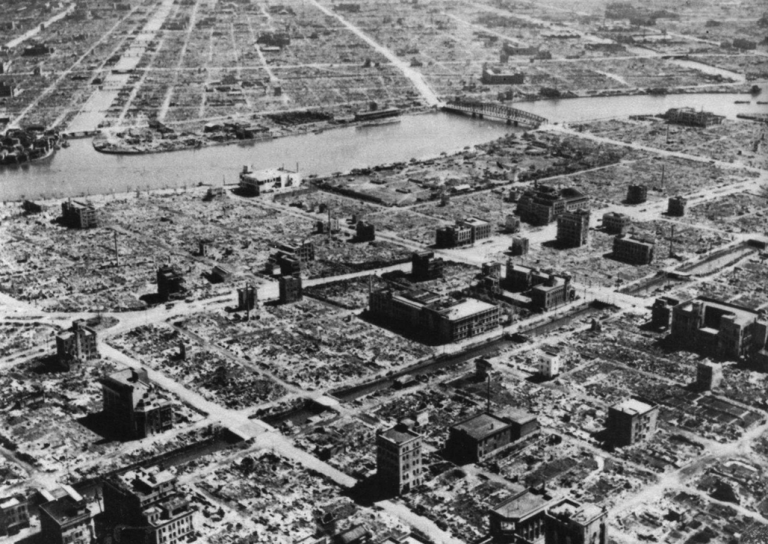
At 11:02 a.m., the bomb detonated over the Urakami Valley with a yield of approximately 21 kilotons — the heart of Nagasaki’s Christian community. The explosion occurred almost directly above the Urakami Cathedral. The blast and subsequent firestorm devastated the district.
The Human Cost
Of the roughly 12,000 Catholics living in Nagasaki at the time, historians estimate that around 8,500 were killed in the bombing and the days that followed. Many died instantly; others suffered terrible burns, radiation sickness, and injuries. Entire Catholic families and communities were wiped out in a single moment.
The tragedy was particularly poignant because Nagasaki’s Christians had already endured centuries of persecution. Many survivors later described the event as a new form of martyrdom.
Legacy and Remembrance
Today, the rebuilt Urakami Cathedral stands as a powerful memorial. Its original bell, twisted and damaged by the heat of the explosion, is preserved as a symbol of peace. The Nagasaki Atomic Bomb Museum and Peace Park honor all victims, while the city continues to maintain the highest percentage of Christians in Japan.
The story of Nagasaki is one of remarkable resilience — a city where Christianity survived brutal persecution for over two centuries, only to face one of the most destructive weapons ever created. It serves as a sobering reminder of the human cost of war and the enduring power of faith through unimaginable hardship.
